3D planning
CT and digital scanning define the position, angulation and depth of each implant before surgery.
A dental implant is a small titanium screw placed in the bone in place of the root of a missing tooth. Once it integrates with the bone, it receives a crown, a bridge or a prosthesis, restoring chewing, speech and your smile with a natural look and function.
It can replace a single tooth, several teeth, or anchor prostheses that stay firm in the mouth instead of a loose denture. Whether it is right for you always depends on an individual evaluation, with a clinical exam and a CT scan.
CT and digital scanning define the position, angulation and depth of each implant before surgery.
The surgical guide directs the drill with precision, which helps make the procedure more predictable, less invasive and with a more comfortable recovery.
The prosthesis over the implant is designed and milled at GD Lab, at the same address as the clinic, with adjustments made on the spot.
For patients with fear or anxiety, the clinic offers light nitrous oxide sedation.
A supporting tool that aids healing and reduces swelling and postoperative discomfort in suitable cases.
Strict sterilization and infection-control protocols at every stage.
Evaluation: consultation, clinical exam and CT scan to find out whether an implant is right for you.
Digital planning: the case is planned in 3D and, when indicated, the surgical guide is made at GD Lab.
Surgery: the implant is placed, usually under local anesthesia, and you receive care instructions.
Healing: the bone integrates with the implant, over a period that varies from case to case.
Prosthesis and maintenance: the crown or prosthesis is installed, and regular follow-up keeps the result.
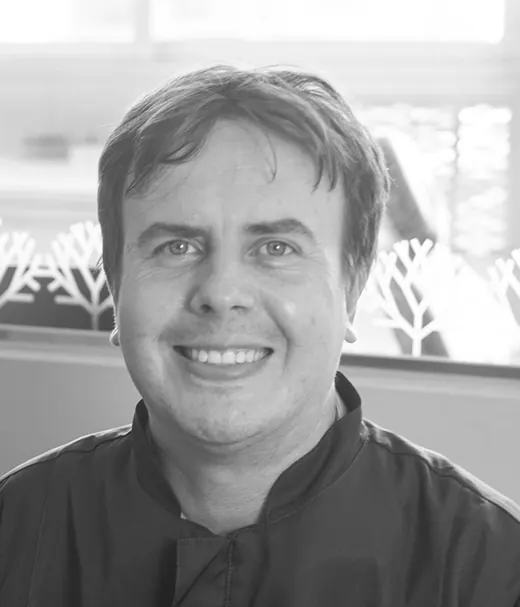
Dr. Andrei Guandalini is a dental surgeon with more than twenty years of clinical practice, a specialist in Implant Dentistry and in TMD and Orofacial Pain, with a master's degree and a PhD in progress in Implant Dentistry from ILAPEO, and a professor at Universidade Tuiuti do Paraná.
He combines clinical practice with digital planning and was the subject of a Terra portal article on guided surgery in implant placement.
Generally, adults with enough oral health and bone. Conditions such as uncontrolled diabetes, smoking and gum disease can affect the result. Only a clinical evaluation and a CT scan can tell whether an implant is right for you.
The procedure is done under local anesthesia, and patients who are afraid can have light nitrous oxide sedation. Some discomfort may follow, managed with the medication your dentist prescribes.
It depends on the case. After the implant is placed, the bone needs to integrate with it, and that period varies from person to person. In some selected cases a temporary tooth can be installed on the same day.
Surgery done with a guide made from the 3D plan, which directs the drill to the planned position, angulation and depth. It helps make the procedure more precise and predictable.
The cost depends on the number of implants, the type of prosthesis and whether prior procedures, such as bone grafting, are needed. That is why the estimate comes after the evaluation. Book a visit by WhatsApp.
At Guandalini Odontologia, at Av. Cândido de Abreu, 140, suite 604, Centro Cívico, open Monday to Friday.
With good hygiene, regular follow-up and control of risk factors such as smoking, implants can last many years. No timeframe can be promised, as it depends on each patient.
8 am to 12 pm and 1:30 pm to 6 pm